- Daily Success Snacks
- Posts
- Why Every Investor Would Leave a Meeting After Slide Two?
Why Every Investor Would Leave a Meeting After Slide Two?
Some words instantly signal you are overthinking it.

Glenda Carnate
January 09, 2026
Read time: 2.5 minutes
You know that moment when a single word makes you realize the meeting is going nowhere?
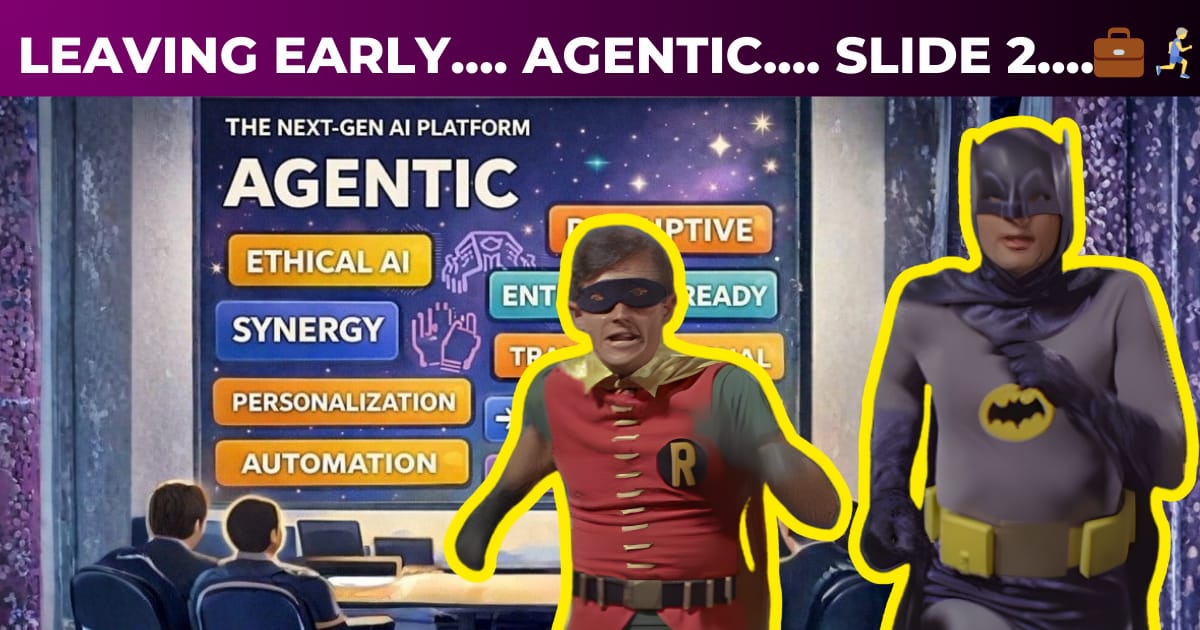
I opened the deck expecting strategy, frameworks, and a little clarity, but by slide two, the word agentic appeared. I stared at it, tried to parse it in context, and realized I was spending more time decoding jargon than understanding the point. Every example, every chart, suddenly felt like extra work I didn’t need. Instead of forcing myself through the rest, I closed the laptop, leaned back, and called it a day. Sometimes leaving early isn’t avoidance; it’s choosing sanity over busy work.
How to spot moments worth stepping back?
Jargon signals friction. If a single word slows comprehension, the meeting is asking you to think about language instead of decisions.
Attention is your currency. Time spent untangling vague slides is time not spent on high-leverage work or insights that move the business.
Early disengagement preserves clarity. Walking away lets your mind reset so you can return with fresh perspective and actionable questions.
Minimalism beats over-analysis. Complex slides often disguise weak assumptions; focus on what truly informs a decision, not what looks impressive.
Focus on patterns, not words. If repeated signals confuse or stall you, the problem isn’t content—it’s the structure and framing of the story.
💡Key Takeaway:
Leaving early isn’t quitting. It’s protecting your focus, conserving energy, and trusting that insight comes from clarity, not endurance.
👉 LIKE this post if a single word has ever stopped you mid-meeting.
👉 SUBSCRIBE now for practical strategies to preserve focus and make decisions faster.
👉 Follow Glenda Carnate for real-world lessons from the frontlines of work and analysis.
Instagram: @glendacarnate
LinkedIn: Glenda Carnate on LinkedIn
X (Twitter): @glendacarnate
👉 COMMENT with the word that has made you walk away before.
👉 SHARE this with someone stuck in a slide deck that never ends.
Reply