- Daily Success Snacks
- Posts
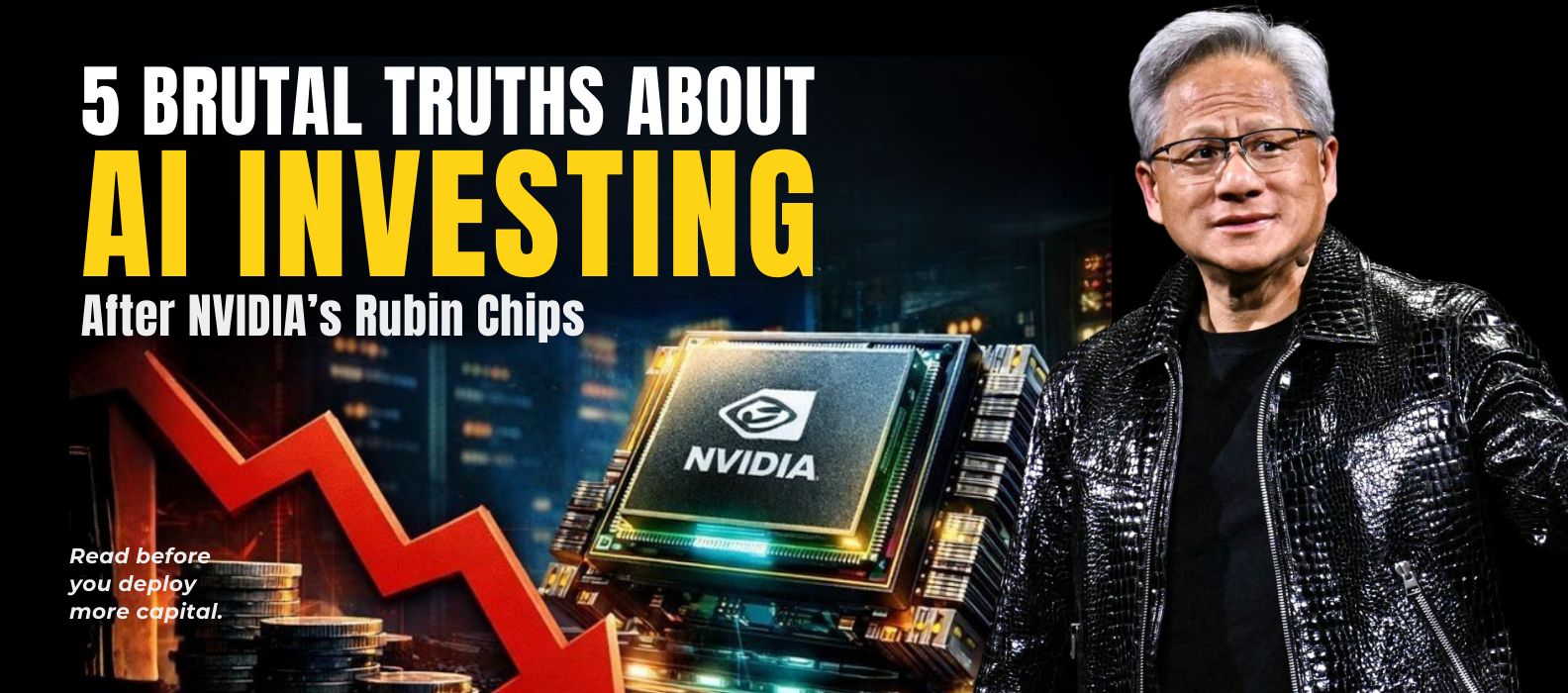
- 5 Brutal Truths About AI Investing After NVIDIA’s Rubin Chips
5 Brutal Truths About AI Investing After NVIDIA’s Rubin Chips
This isn’t about faster chips. It’s about thinner excuses.

Glenda Carnate
January 15, 2026
Read time: 2.5 minutes
NVIDIA didn’t announce Rubin to impress developers. It shipped Rubin to reset expectations. Performance jumped, headlines followed, and capital started leaning forward again. But beneath the excitement sits an uncomfortable question most investors are avoiding. If computing just became this powerful, this standardized, and this available, what exactly are you paying a premium for now?
A few years ago, better infrastructure meant opportunity. Faster GPUs created room for new startups, new tooling, and new stories. Rubin flips that equation. When a single vendor delivers performance at global scale, speed stops being a differentiator and becomes table stakes. The excitement feels familiar. The risk is new.
5 Brutal Truths Rubin Exposes
1. Faster Chips Don’t Create Better Businesses
Rubin delivers real performance gains. It does nothing for pricing power, customer clarity, or durable demand. Compute speed cannot fix weak fundamentals.
2. This Doesn’t Help Startups. It Pressures Them
If NVIDIA ships faster, cheaper, and fully integrated solutions, many startups lose the reason they existed in the first place. Rubin narrows the field instead of expanding it.
3. Technical Moats Just Got Thinner
Custom models and bespoke infrastructure now compete against a single vendor operating at a global scale. If your moat rests solely on architecture, it is already eroding.
4. Capital Intensity Is Back
Rubin assumes rack-scale deployments, serious power availability, and deep balance sheets. This favors hyperscalers and penalizes startups running on narrative and runway.
5. Timing Is Now the Risk
The technology works. Adoption moves more slowly. Markets expect returns faster. Being early no longer signals vision. It creates liquidity pressure.
💡Key Takeaway:
If Rubin existed on day one, would this company still deserve funding today?
If the answer relies solely on future differentiation, hoped-for distribution, or technical novelty, the risk profile just changed.
👉 LIKE this post if infrastructure shifts, capital deployment should change.
👉 SUBSCRIBE now for grounded thinking on AI, markets, and real leverage.
👉 Follow Glenda Carnate for clear-eyed takes beyond the headline cycle.
Instagram: @glendacarnate
LinkedIn: Glenda Carnate on LinkedIn
X (Twitter): @glendacarnate
👉 COMMENT with the moat you trust most in AI right now.
👉 SHARE this with someone heading into an investment committee meeting.
Reply